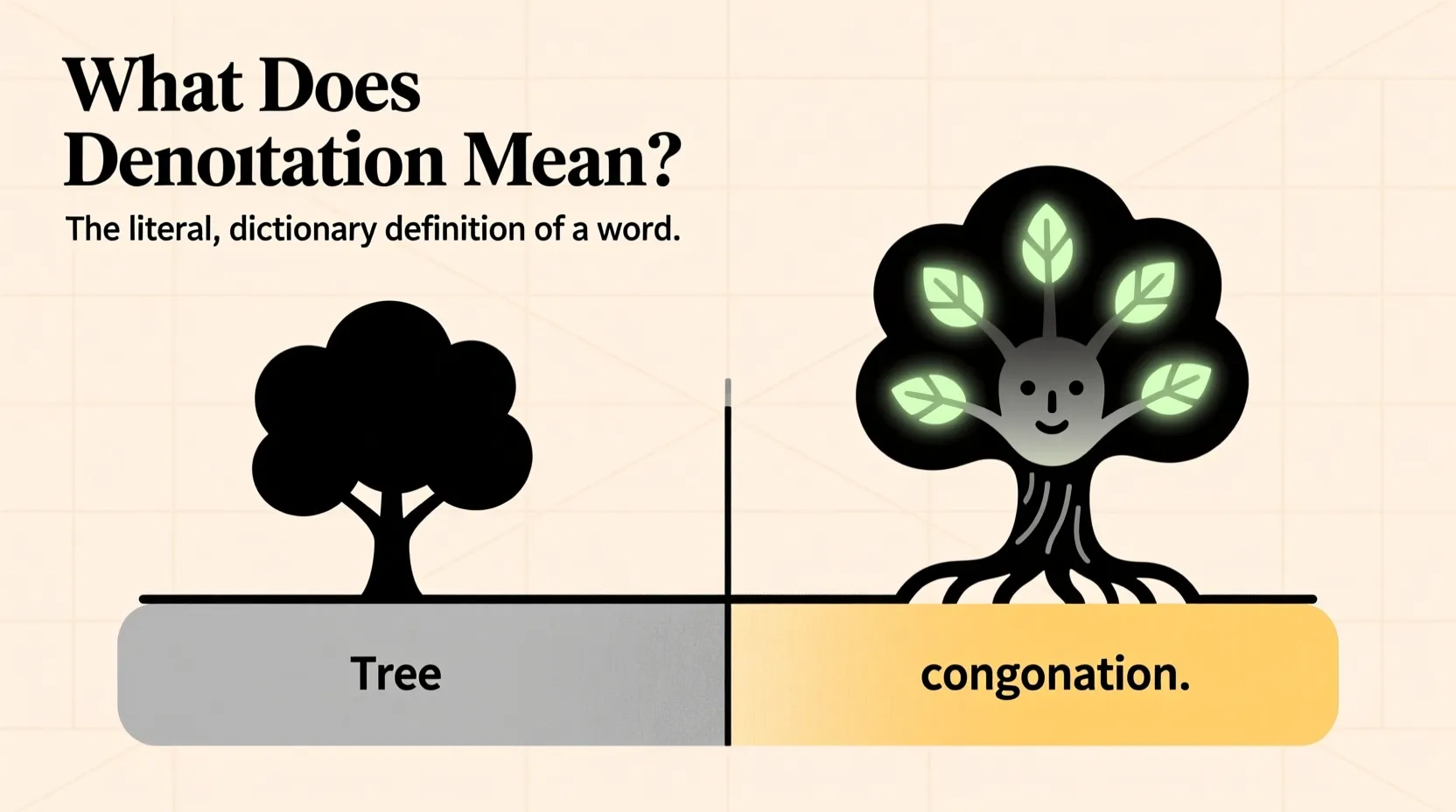
So, one day someone asked me, “Hey, what does denotation actually mean?” 😅 At first, I was a bit confused because I had only heard about the general meaning of words, but then I thought, okay, let’s figure this out.
I remember I was reading a text and trying to understand “denotation,” and honestly, I struggled a little because I usually understand words based on context. Then I grabbed my dictionary and slowly realized that denotation is actually the literal or exact meaning of a word, without any emotions or feelings attached to it.
That’s when I understood that every word has a straight, dictionary meaning, and knowing this makes reading and communication so much clearer. 😎
🧠 What Does Denotation Mean in Text?
The word denotation refers to the literal or dictionary meaning of a word. Unlike connotation, which includes the feelings or ideas associated with a word, denotation is straightforward and factual.
Example Sentence:
- The denotation of “snake” is a legless reptile, not necessarily a deceitful person.
In short: Denotation = Literal meaning = What the word actually stands for.
📱 Where Is Denotation Commonly Used?
Denotation isn’t typical casual slang, but it pops up in:
- 📝 Educational texts – essays, assignments, or study notes
- 💻 Professional communication – presentations, emails, or reports
- 📚 Social media discussions – especially in posts about language, literature, or writing
Tone & Style: Formal, informative, and precise — not casual or flirty.
💬 Examples of Denotation in Conversation
Here are some realistic examples of how someone might reference denotation in a chat or social media post:
- A: Hey, what does “home” really mean here?
B: The denotation is just a place where you live, nothing emotional. - A: I think “cheap” sounds rude in my essay.
B: True, the denotation is “inexpensive,” but the connotation can be negative. - A: What’s the denotation of “rose” in your poem?
B: Literally, it’s just a flower 🌹. - A: Are we overthinking words again?
B: Maybe, but the denotation is worth noting for clarity. - A: I love how English has so many layers!
B: Yeah, denotation vs. connotation is key for writers.
🕓 When to Use and When Not to Use Denotation
✅ When to Use:
- Academic discussions 📚
- Explaining word meanings
- Clarifying facts in professional writing
❌ When Not to Use:
- Casual texting with friends
- Flirty or playful chats
- Urgent or emotional messages
Comparison Table:
| Context | Example Phrase | Why It Works |
|---|---|---|
| Friend Chat | “Just FYI, denotation means literal meaning.” | Educational but informal |
| Work Chat | “Please note the denotation of this term in the report.” | Professional & precise |
| “The denotation of ‘client’ refers to a paying customer.” | Formal & clear |
🔄 Similar Slang Words or Alternatives
| Word | Meaning | When to Use |
|---|---|---|
| Connotation | Implied or emotional meaning | Literature, writing, analysis |
| Literal | Exactly as written | Everyday explanations |
| Definition | Exact meaning in a dictionary | Academic, professional |
| Interpretation | Personal understanding of a word | Discussions, analysis |
❓ FAQs
Q1: Is denotation casual slang?
No, it’s a formal and precise term mainly used in educational or professional contexts.
Q2: How is denotation different from connotation?
Denotation = literal meaning, Connotation = emotional/figurative meaning.
Q3: Can I use denotation in social media captions?
Yes, but only in educational or language-related posts. It’s not typically casual or playful.
Q4: Why is understanding denotation important?
It helps you communicate clearly and avoid misunderstandings, especially in writing.
Conclusion
Next time you see the word denotation, remember it simply refers to the literal meaning of a word, without any extra feelings or implied ideas. Knowing the difference between denotation and connotation can make you a better communicator, whether in essays, emails, or even detailed social media discussions. Understanding words on this level is a small but powerful step toward clearer, smarter conversations!