Muhammad Ali, born Cassius Clay, wasn’t just a boxing legend he was a global icon whose influence transcended sports. Known as “The Greatest,” Ali captivated the world with his unmatched skill in the ring, magnetic personality, and fearless activism. While fans often remember his legendary fights like the “Rumble in the Jungle” and the “Thrilla in Manila,” many are curious about the financial legacy he left behind. From massive fight purses to lucrative endorsements and business ventures, Ali’s wealth story is as fascinating as his athletic career. Over decades, he built a fortune that reflected not only his athletic talent but also his strategic branding and global fame. In this article, we’ll take a deep dive into Muhammad Ali’s net worth, explore the sources of his wealth, and understand how the man who floated like a butterfly and stung like a bee managed his financial empire.
Early Life and Career Beginnings
Muhammad Ali was born Cassius Marcellus Clay Jr. on January 17, 1942, in Louisville, Kentucky. Growing up in a segregated America, he faced challenges early on, but his determination and charisma set him apart. Ali discovered boxing at the age of 12, after his bicycle was stolen, prompting him to learn self-defense. Under the guidance of trainer Joe Martin, young Cassius quickly developed his skills, showing a rare combination of speed, agility, and confidence.
Ali’s amateur career flourished, earning him an impressive record of 100 wins and just 5 losses. His dedication culminated in the 1960 Rome Olympics, where he won a gold medal in the light heavyweight division. This victory not only marked the beginning of his international fame but also opened the door to lucrative financial opportunities. Even as an amateur, Ali began attracting attention from promoters, sponsors, and the media—early indicators of the wealth he would later amass.
Turning professional shortly after the Olympics, Ali’s first fight purse was modest by today’s standards but significant for a young boxer in the early 1960s. His talent, charisma, and bold personality helped him secure increasingly larger paydays with each fight. These formative years laid the foundation for Ali’s financial success, proving that his net worth would be built not only on his extraordinary skill in the ring but also on his ability to captivate audiences worldwide.
Professional Boxing Career
Muhammad Ali’s professional boxing career, spanning from 1960 to 1981, was not only legendary in the sports world but also the cornerstone of his wealth. After turning pro, Ali quickly made a name for himself with his unorthodox fighting style, incredible speed, and charismatic personality. His early fights brought modest purses, but as his reputation grew, so did the size of his earnings.
Ali’s financial breakthrough came with high-profile bouts that captured global attention. The “Fight of the Century” against Joe Frazier in 1971 reportedly earned him over $2.5 million, a record at the time. Two years later, the “Rumble in the Jungle” against George Foreman in Zaire brought Ali worldwide fame and significant financial reward, with estimates suggesting a purse exceeding $5 million, plus international endorsements. The “Thrilla in Manila” in 1975 further solidified his status as the highest-paid athlete of his era.
Beyond the purses, Ali’s flair for promotion amplified his earnings. He famously negotiated contracts that included a percentage of gate receipts and broadcast rights, a move ahead of its time. By leveraging his fame, he transformed each fight into a global spectacle, maximizing both revenue and exposure.
Over his 21-year career, Ali earned tens of millions of dollars an extraordinary sum in the 1960s and 70s. Adjusted for inflation, these earnings would equate to hundreds of millions today, forming the foundation of the net worth he would continue to build through endorsements, appearances, and business ventures.
Endorsements and Sponsorship Deals
While Muhammad Ali’s boxing career brought in the bulk of his earnings, his endorsements and sponsorships played a crucial role in building his overall net worth. Even during the peak of his career, Ali’s charisma, confidence, and global recognition made him a sought-after figure for brands, commercials, and public appearances.
Ali partnered with a variety of companies over the years, appearing in advertisements for Coca-Cola, Kodak, and Louis Vuitton, among others. He also participated in television commercials, motivational speaking events, and promotional tours worldwide. These deals often paid handsomely, sometimes rivaling the income he made in the ring. Unlike many athletes of his time, Ali understood the value of his personal brand, using it to create opportunities that extended beyond sports.
One of the most notable aspects of Ali’s endorsements was his ability to command higher fees thanks to his outspoken personality and global fame. Promoters and companies were willing to pay a premium for the chance to associate with “The Greatest.” Even in retirement, Ali continued to earn from his legacy, including licensed merchandise, autobiographies, and media appearances.
Overall, while his fight purses provided immediate wealth, Ali’s endorsement deals added millions to his fortune, diversifying his income sources and ensuring financial stability. By combining his athletic prowess with smart branding, Ali became one of the first athletes to truly capitalize on fame, setting a precedent for modern sports stars and contributing significantly to his impressive net worth.
Business Ventures and Investments
Muhammad Ali’s financial success extended beyond the boxing ring and endorsements into business ventures and strategic investments. While not as widely publicized as his fights, these endeavors contributed significantly to his net worth over time. Ali understood early on that longevity in wealth required diversifying his income, and he seized opportunities that aligned with his fame and influence.
Ali invested in real estate, acquiring properties in the United States that appreciated in value over the years. He also explored ventures such as restaurants and merchandise deals, including branded memorabilia, clothing, and collectibles. Some of his signed gloves, robes, and championship belts would later sell for hundreds of thousands of dollars at auctions, cementing their status as valuable assets.
In addition, Ali participated in various media projects, including documentaries, television specials, and appearances in films, which not only reinforced his brand but also generated revenue. He occasionally consulted on projects and licensing agreements, leveraging his iconic image to create long-term financial opportunities.
While Ali faced the usual challenges of managing wealth—such as taxes, expenses, and charitable commitments—his business acumen ensured that his earnings were not limited to his fight purses. By combining investments, real estate, and licensing deals, Ali built a diversified portfolio that contributed substantially to his net worth. These ventures showcased a side of Ali often overlooked: a strategic entrepreneur who recognized the power of his brand and legacy, turning fame into lasting financial security.
Lifestyle and Spending
Muhammad Ali’s wealth allowed him to live a lavish and high-profile lifestyle, reflecting both his fame and the era in which he became a global superstar. Known for his charisma and larger-than-life persona, Ali didn’t shy away from enjoying the fruits of his labor, from luxury homes to exotic cars and fine travel.
Throughout his career, Ali owned multiple properties, including homes in Miami, Las Vegas, and Louisville, where he often entertained friends, family, and fellow celebrities. His residences were more than just places to live—they were symbols of his status as one of the world’s most famous athletes. In addition to real estate, Ali had a collection of luxury vehicles and often traveled first-class to international events, promotional appearances, and charity functions.
Despite the extravagant lifestyle, Ali was also known for his generosity. He donated millions to charitable causes, civil rights organizations, and religious institutions, reflecting his belief in giving back. While these contributions reduced the total of his net worth, they solidified his reputation as a philanthropist who used wealth to create positive change.
Ali also invested in experiences, from attending elite social events to meeting global leaders and celebrities, further elevating his personal brand. His spending was a reflection of both enjoyment and strategy: by staying in the public eye, he maintained influence, ensured continued endorsement opportunities, and strengthened the value of his name. In many ways, Ali’s lifestyle was an extension of his legendary persona, blending luxury, generosity, and showmanship.
Net Worth Estimates
Estimating Muhammad Ali’s net worth requires examining his career earnings, endorsements, business ventures, and investments over several decades. At the height of his boxing career in the 1960s and 1970s, Ali earned tens of millions of dollars from fight purses alone—a remarkable sum for the time. Major bouts like the “Fight of the Century,” “Rumble in the Jungle,” and “Thrilla in Manila” brought him record paydays, with some fights netting him $2.5 million to $5 million, equivalent to tens of millions today after adjusting for inflation.
In addition to his in-ring earnings, Ali’s endorsements and sponsorships contributed significantly to his wealth. Deals with brands such as Coca-Cola and Kodak, along with paid appearances and merchandising, helped him diversify his income and ensure financial stability even after retiring from boxing.
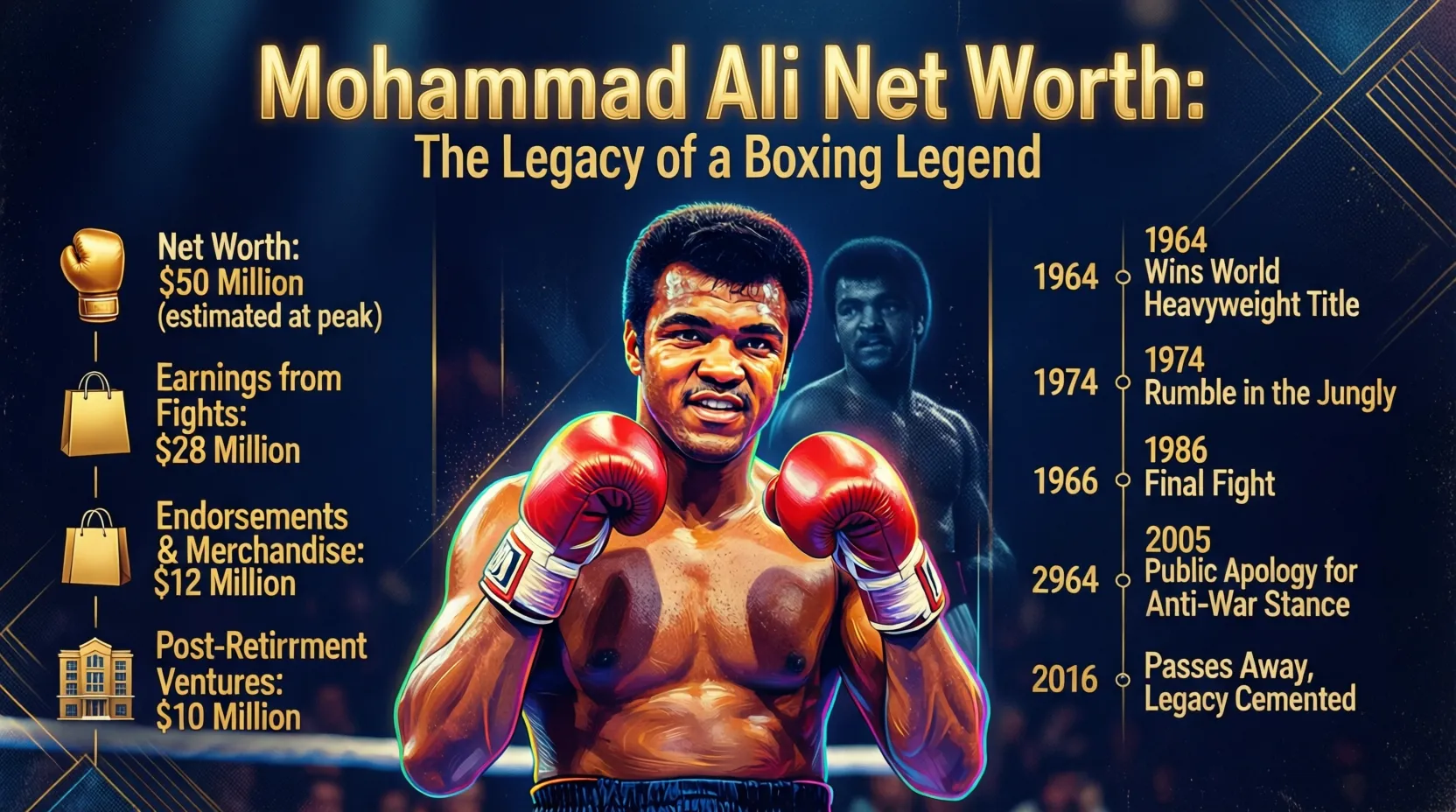
Ali also benefited from business ventures, including real estate investments, memorabilia sales, and media projects, which added millions more to his overall fortune. Despite his generous charitable contributions and high-profile lifestyle, Ali reportedly left behind an estimated net worth of $50 million to $80 million at the time of his passing in 2016.
While exact figures vary across sources, including Forbes and Celebrity Net Worth, it’s clear that Ali’s financial legacy reflected not only his success in the ring but also his savvy in leveraging fame, endorsements, and investments. His net worth serves as a testament to how talent, branding, and strategic thinking can combine to create lasting financial impact.
Ali’s Wealth Philosophy
Muhammad Ali’s approach to money was as bold and unique as his boxing style. While he amassed considerable wealth through his career, endorsements, and investments, Ali often emphasized that financial gain was not his ultimate goal. For him, wealth was a tool to support his family, contribute to charitable causes, and amplify his influence on social issues.
Ali believed in giving back generously, often donating to civil rights organizations, religious groups, and humanitarian causes. He once stated that helping others was more important than accumulating riches—a mindset that shaped how he managed his fortune. Even at the height of his fame, Ali balanced spending on luxury and comfort with meaningful contributions to society.
Another key element of Ali’s philosophy was the power of personal branding. He recognized early that his name, image, and charisma were invaluable assets. By carefully cultivating his public persona, negotiating endorsements, and controlling how he presented himself, Ali transformed fame into long-term financial opportunities. This approach made him one of the first athletes to truly capitalize on global recognition, setting a model for future sports stars.
Ali also believed in financial self-reliance and preparation for the future, using investments and business ventures to create stability beyond boxing. His wealth philosophy combined generosity, strategic thinking, and the pursuit of influence, showing that true fortune is measured not just in dollars, but in the ability to impact the world positively.
Legacy Beyond Money
Muhammad Ali’s influence extends far beyond his financial achievements. While his net worth and career earnings are impressive, his true legacy lies in the cultural, social, and humanitarian impact he left behind. Ali used his platform as a global sports icon to challenge societal norms, advocate for civil rights, and inspire millions around the world.
In addition to his athletic accomplishments, Ali became a symbol of courage, conviction, and activism. He famously refused induction into the U.S. Army during the Vietnam War on religious and moral grounds, a decision that cost him prime years in the ring but solidified his status as a principled leader. This bravery, combined with his charismatic personality, made him one of the most recognizable and respected figures globally.
Ali’s influence also shaped the financial strategies of future athletes. By capitalizing on endorsements, business ventures, and public appearances, he demonstrated how personal branding could be leveraged for long-term wealth and societal influence. Modern sports stars from LeBron James to Serena Williams follow in his footsteps, balancing earnings with social impact.
Conclusion
Muhammad Ali’s net worth represents more than a mere financial figure; it reflects a lifetime of influence, determination, and cultural significance. While estimates of his wealth at the time of his passing vary, what truly matters is the breadth of his impact on sports, society, and humanitarian causes. Ali’s earnings from boxing, endorsements, and public appearances allowed him to live a life of prominence, yet his financial story cannot be separated from his social and political legacy. The evolution of his wealth mirrors the challenges and triumphs he faced: from the lucrative purses of championship fights to the personal costs of standing by his principles during tumultuous times. Beyond the monetary dimension, Ali’s “net worth” includes intangible assets such as his reputation, his contributions to civil rights, and the inspiration he provided to millions around the world. In a meta sense, assessing Ali’s financial legacy encourages us to consider how we measure success. Is net worth simply a dollar amount, or does it encompass cultural resonance, ethical courage, and enduring influence? Ali’s life suggests that true value is multidimensional, combining economic achievement with moral conviction and social impact. Therefore, reflecting on Muhammad Ali’s net worth is not only an exercise in numbers but also an exploration of the holistic legacy of a man whose influence transcended the ring and continues to resonate globally.