Kobe Bryant, famously known as the Black Mamba, wasn’t just one of the greatest basketball players of all time—he was also a financial powerhouse. Over a 20-year career with the Los Angeles Lakers, Kobe not only dominated the court with his talent and work ethic but also built an impressive fortune through NBA salaries, endorsements, and smart business ventures. From his rookie contract straight out of high school to multimillion-dollar deals with global brands like Nike, Kobe’s earnings reflected both his skill and his marketability. Beyond basketball, he invested in startups, launched his own media company, and ventured into books and film, creating multiple income streams that grew his wealth significantly. In this article, we take a deep dive into Kobe Bryant’s net worth, exploring his career earnings, investments, real estate, philanthropy, and the strategies that helped him amass one of the most iconic fortunes in sports history.
Early Life and First Steps Toward Wealth
Kobe Bryant was born on August 23, 1978, in Philadelphia, Pennsylvania, into a family with a strong basketball background. His father, Joe “Jellybean” Bryant, was a former NBA player, which gave Kobe early exposure to the sport and an understanding of the opportunities it could bring. Growing up, Kobe split his time between the United States and Italy, where his father played professionally. This international experience not only honed his basketball skills but also exposed him to different cultures and lifestyles, shaping his perspective on money, discipline, and ambition.
Kobe’s path to wealth began even before he entered the NBA. By excelling in high school basketball at Lower Merion High School, he gained national attention, leading to lucrative endorsement opportunities once he declared for the 1996 NBA Draft. Selected 13th overall by the Charlotte Hornets and immediately traded to the Los Angeles Lakers, Kobe signed his first rookie contract, which laid the foundation for his financial journey. Even at this early stage, he demonstrated a keen sense of brand building, participating in marketing campaigns and public appearances that would become a hallmark of his career. These early steps—combining athletic excellence with smart financial moves—set the stage for the massive fortune he would later amass, proving that Kobe’s success was as much about strategic planning as it was about talent.
NBA Career Earnings
Kobe Bryant’s 20-year career with the Los Angeles Lakers was not only legendary on the court but also immensely lucrative. From his rookie season in 1996, Kobe steadily increased his earnings, signing multiple high-value contracts that reflected his status as one of the league’s elite players. Over the course of his career, he earned approximately $323 million in NBA salaries alone, making him one of the highest-paid athletes in basketball history.
His contracts included several maximizing extensions, with notable deals in 2003, 2004, and 2009, each significantly increasing his annual salary. At his peak, Kobe’s annual NBA salary exceeded $30 million, excluding bonuses and playoff incentives. These earnings, however, were only a part of his wealth, as Kobe understood the importance of leveraging his brand beyond the court.
Kobe’s consistent performance, including five NBA championships and two NBA Finals MVP awards, made him a valuable asset for the Lakers and helped secure long-term, high-paying contracts. He also benefited from league-wide revenue growth, including television deals and endorsements tied to team and league performance.
By combining his talent with shrewd contract negotiations and maintaining peak performance for two decades, Kobe Bryant created a solid financial foundation. His NBA earnings alone provided him with substantial wealth, but his foresight in endorsements, investments, and business ventures would later multiply his net worth far beyond his on-court salary.
Major Endorsements and Sponsorship Deals
Kobe Bryant’s earnings were not limited to his NBA salary. From early in his career, he became a highly marketable athlete, securing endorsement deals with major global brands that significantly boosted his wealth. His most iconic partnership was with Nike, which created the legendary Kobe Bryant sneaker line, generating millions in royalties and solidifying his status as a global sports icon.
In addition to Nike, Kobe partnered with companies like Adidas, Sprite, McDonald’s, and Bodyarmor, endorsing products that ranged from beverages to athletic apparel. These deals often paid millions annually, sometimes surpassing his on-court salary, highlighting the power of his personal brand.
Kobe was also selective, focusing on endorsements that aligned with his image of excellence, discipline, and innovation. By doing so, he not only maximized income but also strengthened his long-term financial security and post-retirement opportunities.
Through strategic partnerships and brand management, Kobe Bryant transformed his popularity into a sustainable revenue stream, proving that his financial success was as intentional as his basketball dominance. His endorsements played a crucial role in building a net worth that would continue growing even after he retired from professional basketball.
Business Ventures and Investments
Beyond basketball and endorsements, Kobe Bryant was a savvy entrepreneur who used his fame to build diverse business ventures. One of his most notable investments was Kobe Inc., a company he launched to invest in startups and support emerging businesses. Through this platform, he backed companies like BodyArmor, a sports drink brand, which later sold to Coca-Cola for a reported $5.6 billion, earning Kobe a significant financial return.
Kobe also ventured into media and entertainment through Granity Studios, his storytelling company focused on books, films, and creative projects. He won an Academy Award in 2018 for the animated short film Dear Basketball, demonstrating his ability to turn passion into profitable business ventures.
In addition to media, Kobe made strategic investments in tech startups and other brands, leveraging his personal brand to grow his wealth. He carefully diversified his portfolio, understanding that NBA salaries and endorsements, while substantial, were finite.
These investments showcased Kobe’s forward-thinking approach to money and demonstrated that he viewed his financial life as a long-term game. By combining smart investments with entrepreneurial vision, Kobe Bryant ensured that his fortune would continue to grow even after his playing days ended, cementing his legacy both on and off the court.
Real Estate and Luxury Assets
Kobe Bryant’s wealth was reflected not only in his income and investments but also in his luxurious lifestyle and real estate holdings. Over the years, Kobe purchased multiple high-end properties, including a sprawling mansion in Orange County, California, and an estate in Beverly Hills, valued collectively at tens of millions of dollars. These homes featured state-of-the-art amenities, expansive views, and private gyms—ideal for a professional athlete of his stature.
Beyond real estate, Kobe owned luxury cars, private jets, and fine art, all of which contributed to his status as a high-net-worth individual. He often combined comfort with practicality, selecting assets that complemented both his family life and professional commitments.
Kobe’s approach to luxury was strategic: he invested in assets that retained value over time, ensuring that his wealth was not only enjoyed but also preserved. This included real estate in prime locations and collectibles with long-term appreciation potential.
His carefully curated lifestyle reflected his success and discipline, demonstrating that Kobe Bryant’s wealth extended beyond salaries and endorsements. By investing in tangible assets alongside financial ventures, he built a balanced portfolio that showcased both prestige and smart financial management, contributing to his estimated net worth of $600 million at the time of his passing.
Post-Retirement Income and Ventures
After retiring from the NBA in 2016, Kobe Bryant continued to grow his wealth through diverse income streams beyond basketball. He focused on entrepreneurship, storytelling, and media production, turning his fame into lasting business success. One of his most notable ventures was Granity Studios, a media company he founded to produce books, films, and educational content. His 2017 animated short Dear Basketball earned an Academy Award, adding both prestige and financial rewards to his post-retirement portfolio.
Kobe also maintained his investments in companies like BodyArmor, which saw explosive growth and contributed significantly to his net worth. Licensing deals, royalties from his signature Nike sneakers, and appearances further added to his income, proving that his retirement did not slow his earning potential.
In addition, Kobe engaged in mentorship, public speaking, and brand partnerships that leveraged his global influence. His approach to post-retirement income demonstrated strategic planning, focusing on ventures that aligned with his personal brand and long-term financial goals.
By creating multiple revenue streams outside of basketball, Kobe Bryant ensured that his net worth continued to rise, solidifying his status as not only a legendary athlete but also a shrewd businessman with a lasting financial legacy.
Philanthropy and Charitable Contributions
Kobe Bryant was not only focused on building wealth but also on giving back to the community. Throughout his life, he supported numerous charitable initiatives, particularly those benefiting youth, education, and sports development. One of his most notable efforts was the Kobe and Vanessa Bryant Family Foundation, which aimed to help young people in need, provide educational opportunities, and support families facing hardship.
Kobe was also actively involved with after-school programs, basketball camps, and youth sports leagues, mentoring countless young athletes and providing resources to help them achieve their goals. His commitment to philanthropy extended internationally, including support for organizations in Italy and other countries where he spent his early years.
In addition to financial contributions, Kobe used his platform to raise awareness for important causes, from pediatric health initiatives to disaster relief efforts. By leveraging his fame and resources, he maximized the impact of his charitable work, showing that his influence extended far beyond basketball.
Philanthropy was an integral part of Kobe Bryant’s legacy, reflecting his belief that success comes with responsibility. His charitable efforts not only improved countless lives but also enhanced his reputation as a role model, demonstrating that his wealth could serve a greater purpose beyond personal gain.
Net Worth Over the Years
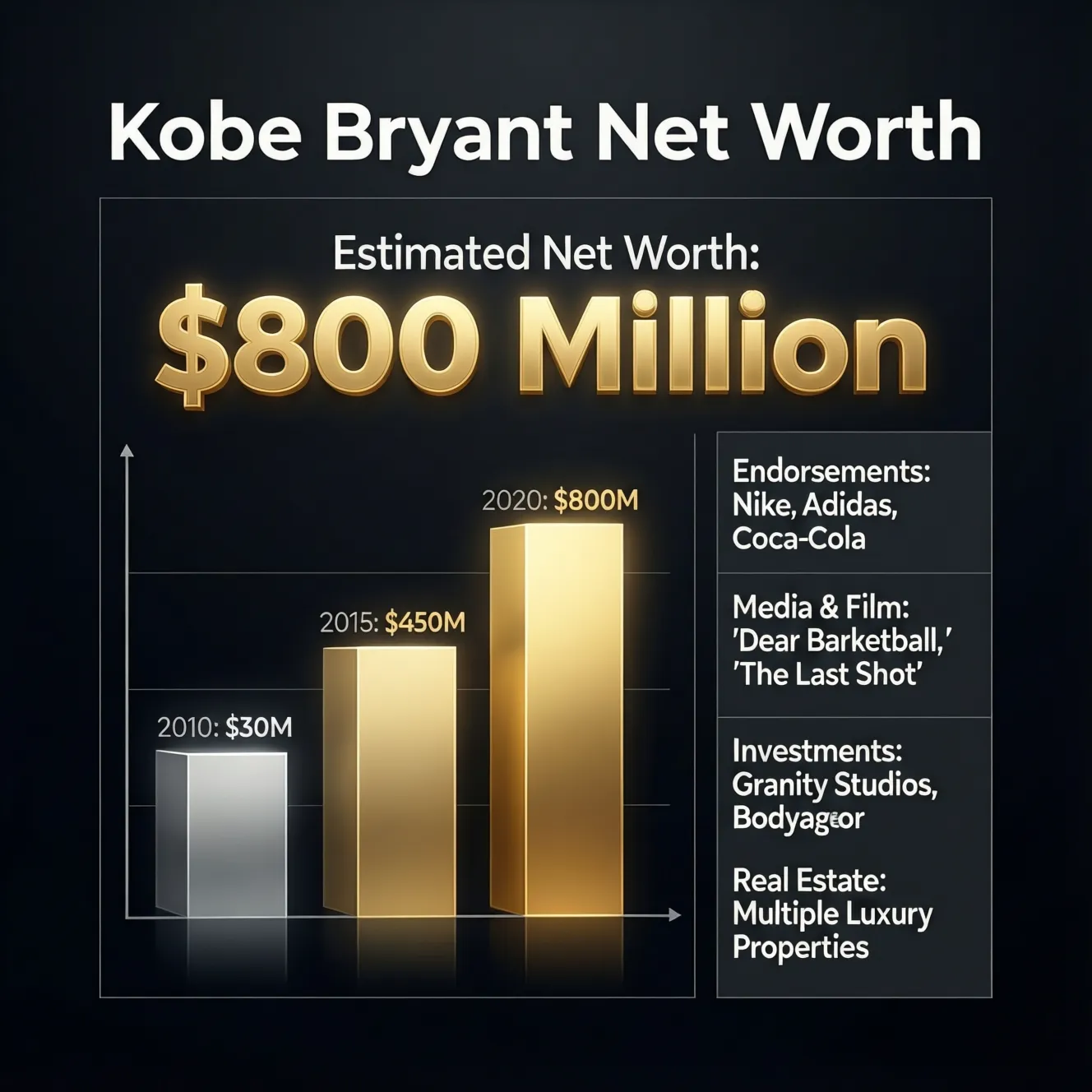
Kobe Bryant’s net worth grew steadily throughout his 20-year NBA career and beyond, reflecting his talent, business acumen, and strategic investments. Early in his career, his rookie salary and initial endorsement deals gave him a modest foundation, but as he became a global superstar, his earnings skyrocketed. By the mid-2000s, his annual NBA salary often exceeded $20 million, with endorsement deals adding millions more each year.
At the peak of his career, Kobe’s net worth was estimated at around $400 million, driven by lucrative contracts with the Lakers and major brands like Nike, Sprite, and Adidas. After his retirement in 2016, his net worth continued to grow thanks to smart investments in startups, his media company Granity Studios, and stakes in companies like BodyArmor. By the time of his tragic passing in 2020, his total net worth was estimated at $600 million, making him one of the wealthiest athletes of all time.
Kobe’s wealth was not just a reflection of his salary but of his diverse income streams, investments, and long-term planning. From rookie contracts to post-retirement ventures, he built a fortune that continues to inspire athletes and entrepreneurs alike, demonstrating the importance of vision, discipline, and financial strategy in building lasting wealth.
How Kobe Bryant Managed His Wealth
Kobe Bryant’s financial success was not just the result of high salaries and endorsements—it was also due to careful wealth management and strategic planning. From the beginning of his career, Kobe understood the importance of diversifying income streams, combining NBA contracts with endorsements, business ventures, and investments. This approach ensured that his wealth continued to grow even after retirement.
He focused on long-term investments rather than short-term spending, carefully selecting companies and startups with growth potential. His involvement in Granity Studios and investments in brands like BodyArmor demonstrated a keen eye for opportunities that aligned with his personal brand. Kobe also relied on professional financial advisors to structure his assets, minimize taxes, and safeguard his fortune for his family.
In addition to investments, Kobe maintained a disciplined lifestyle, balancing luxury purchases with smart asset accumulation. He often shared financial advice with younger athletes, emphasizing the importance of planning, patience, and protecting earnings.
By managing his wealth strategically, Kobe Bryant set an example of how athletes can transition from playing careers to lasting financial stability. His foresight and disciplined approach ensured that his fortune was not only substantial but sustainable, leaving a financial legacy as impressive as his athletic achievements.
Legacy and Influence Beyond Money
Kobe Bryant’s legacy extends far beyond his impressive net worth. Known as the Black Mamba, he inspired millions with his dedication, work ethic, and relentless pursuit of excellence. On the court, he redefined basketball standards, winning five NBA championships and earning two NBA Finals MVP awards, leaving an indelible mark on the sport.
Off the court, Kobe’s influence was equally significant. Through his media company Granity Studios, he shared stories that motivated young athletes and creative minds alike. His philanthropic efforts, from youth basketball programs to educational initiatives, demonstrated that he valued giving back and using his platform to improve lives.
Kobe also became a global role model for professionalism, discipline, and resilience. His financial strategies, investments, and post-retirement ventures set an example for athletes and entrepreneurs, showing how to turn fame into lasting impact.
Even after his tragic passing in 2020, Kobe’s influence continues to resonate through his family, fans, and the countless individuals he mentored. His legacy proves that true success is measured not just in dollars but in the inspiration, guidance, and opportunities one leaves behind, cementing Kobe Bryant as a legend both in sports and in life.
Conclusion
Kobe Bryant’s financial journey mirrors the dedication, discipline, and vision he brought to basketball. From his rookie years to his peak NBA salary and beyond, he carefully built a fortune through contracts, endorsements, investments, and business ventures. Yet, his wealth was more than just numbers—it was a reflection of his ability to plan strategically, diversify income streams, and leverage his influence for long-term success.
Beyond his net worth, Kobe’s impact resonates through his philanthropy, media projects, and mentorship, proving that his legacy was about inspiring others as much as achieving personal success. His investments in startups, ownership of luxury assets, and entrepreneurial ventures show how a superstar athlete can transition into a sustainable business leader.
Kobe Bryant’s story teaches a valuable lesson: true wealth is built through hard work, smart decision-making, and a commitment to leaving a positive legacy. Even after his passing, his life continues to inspire athletes, entrepreneurs, and fans worldwide. While his fortune was impressive, it was his vision, resilience, and dedication to excellence that made him truly unforgettable. Kobe Bryant’s legacy is a reminder that financial success, when paired with purpose and passion, can create an enduring impact that transcends generations.