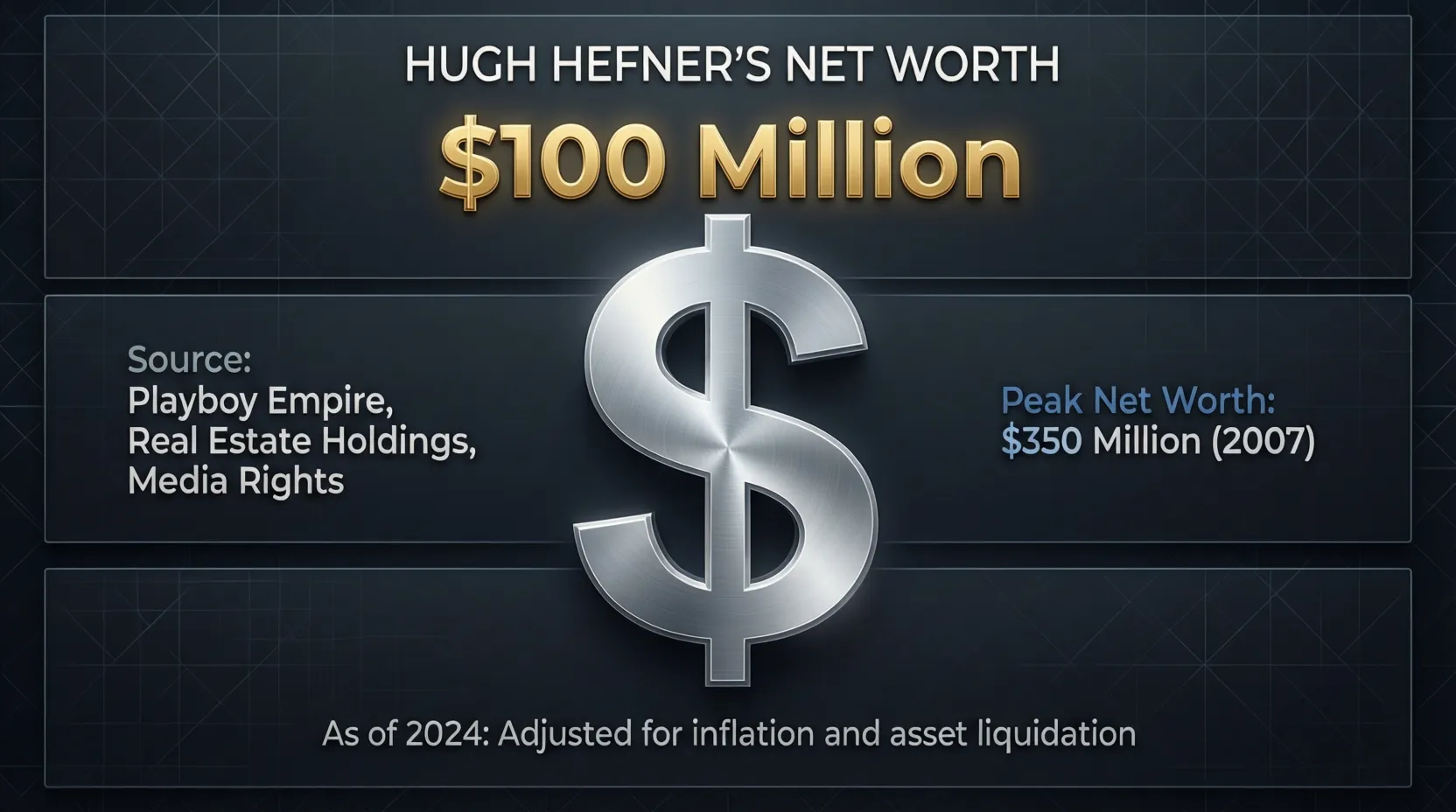
Hugh Hefner, the iconic founder of Playboy magazine, was more than just a media mogul—he was a symbol of luxury, lifestyle, and cultural transformation. From launching Playboy in 1953 with a bold vision to building a global brand recognized around the world, Hefner’s entrepreneurial journey made him one of the wealthiest figures in entertainment history. At the peak of his career, his net worth reflected not only the success of Playboy magazine but also his savvy investments in real estate, media, and lifestyle ventures. Today, people are curious about how Hefner accumulated his fortune, how much he was worth at the time of his passing, and the lifestyle his wealth afforded him. In this article, we’ll explore Hugh Hefner’s net worth in detail, breaking down the sources of his wealth, his luxurious lifestyle, his business empire, and the lasting legacy he left behind.
Early Life and Career
Hugh Marston Hefner was born on April 9, 1926, in Chicago, Illinois, into a middle-class family. Raised by parents who valued education and ambition, Hefner developed an early interest in writing and journalism. He attended Steinmetz High School and later went on to study psychology at the University of Illinois at Urbana-Champaign, where he also worked on the campus newspaper. During World War II, Hefner served in the U.S. Army, gaining discipline and experience that would later shape his professional life.
After the war, Hefner pursued a career in magazine publishing, starting as a copywriter for several small publications. His experiences in journalism and advertising helped him understand the power of media in shaping culture. In 1953, with a vision to combine sophisticated lifestyle content with adult entertainment, he launched Playboy magazine, investing $8,000 of his own savings. The magazine’s debut issue, featuring Marilyn Monroe, quickly captured public attention and set the foundation for what would become a billion-dollar empire.
Hefner’s early career was defined by his boldness and willingness to challenge societal norms. By merging erotic content with cultural commentary, he created a publication that appealed to a broad audience while cementing his reputation as a forward-thinking entrepreneur. These formative years laid the groundwork for the wealth, influence, and iconic lifestyle that would define Hugh Hefner’s life and career.
Playboy: The Business Empire
In 1953, Hugh Hefner transformed the publishing world by launching Playboy magazine, combining sophisticated lifestyle content with adult entertainment—a concept that was revolutionary at the time. The first issue, featuring Marilyn Monroe on the cover, sold over 50,000 copies, instantly establishing Hefner as a visionary entrepreneur. This early success allowed him to expand the brand beyond print media and lay the foundation for a multi-million-dollar business empire.
Under Hefner’s leadership, Playboy grew into a cultural phenomenon. The magazine became known for its high-quality journalism, interviews with world leaders and celebrities, and of course, its iconic centerfolds. Advertising revenue skyrocketed as businesses recognized the magazine’s wide influence, contributing significantly to Hefner’s net worth.
Hefner didn’t stop at publishing. He expanded the Playboy brand into television, movies, merchandise, and even digital media, creating multiple income streams. Licensing deals for Playboy-branded products—ranging from clothing to fragrances—further bolstered his wealth. Additionally, Hefner invested strategically in real estate, including the famous Playboy Mansion in Los Angeles, which became both a personal residence and a symbol of his extravagant lifestyle.
By blending media innovation, brand development, and lifestyle marketing, Hugh Hefner turned a single magazine into a global enterprise. The Playboy business model not only generated massive revenue but also cemented Hefner’s status as a pioneering media mogul whose influence extended far beyond publishing, shaping pop culture and entertainment for decades.
Sources of Wealth
Hugh Hefner’s impressive net worth was built on multiple revenue streams, with Playboy magazine serving as the cornerstone of his fortune. Subscription fees and advertising revenue from the magazine provided a steady and substantial income, especially during the 1960s and 1970s when circulation peaked. By featuring high-profile interviews, quality journalism, and celebrity content, Playboy attracted advertisers willing to pay premium rates, which significantly contributed to Hefner’s wealth.
Beyond publishing, Hefner diversified his income through strategic licensing and merchandising deals. Playboy-branded products—including apparel, fragrances, and home goods—generated millions in additional revenue. The expansion into television and film projects, such as Playboy After Dark and other media ventures, further solidified his financial standing.
Real estate was another key contributor to Hefner’s wealth. The Playboy Mansion in Los Angeles, purchased in 1971, became an iconic symbol of his luxurious lifestyle and a valuable asset in itself. He also owned other properties, including apartments, vacation homes, and investment properties, which appreciated over time.
Hefner’s personal investments in stocks, art, and collectibles added another layer of financial growth, demonstrating his business acumen beyond publishing. By combining media innovation, brand diversification, real estate, and personal investments, Hugh Hefner created a wealth-building model that not only made him one of the richest figures in entertainment but also left a lasting legacy in business and pop culture.
Net Worth Over Time
Hugh Hefner’s net worth evolved significantly throughout his career, reflecting both the growth of the Playboy empire and his savvy investments. In the early years of Playboy, Hefner reinvested magazine profits into expanding the brand, which quickly increased his personal wealth. By the late 1960s, his net worth was estimated to be in the tens of millions, fueled by booming magazine circulation, lucrative advertising deals, and high-profile media ventures.
The 1970s and 1980s marked the peak of Hefner’s financial success. Playboy had become a globally recognized brand, generating consistent revenue from subscriptions, licensing, and merchandising. During this period, estimates placed Hefner’s net worth at over $200 million, with the Playboy Mansion alone valued at tens of millions of dollars. His investments in stocks, art, and other real estate holdings further contributed to his growing fortune.
By the time of his passing in 2017, Hugh Hefner’s net worth was estimated at around $50 million to $70 million, according to various sources. Although the figure appears lower than peak estimates, much of his wealth had been tied up in the Playboy brand and assets that were distributed among heirs or reinvested into business ventures. Comparatively, Hefner stood alongside other media moguls of his era, demonstrating how a single magazine could be leveraged into a diverse and lasting fortune.
Hefner’s financial journey showcases the highs and fluctuations of building a media empire, highlighting his entrepreneurial skill and the enduring cultural impact of the Playboy brand.
Lifestyle and Personal Spending
Hugh Hefner was as famous for his luxurious lifestyle as for building the Playboy empire. The Playboy Mansion in Los Angeles, purchased in 1971, became the centerpiece of his extravagant life. The sprawling estate, complete with a zoo, pool, grotto, and private screening rooms, was not just a home—it was a symbol of Hefner’s wealth and social influence. Lavish parties hosted at the mansion often featured celebrities, models, and entertainers, further cementing its place in pop culture history.
Hefner’s spending extended beyond real estate. He maintained a collection of high-end cars, rare artwork, and luxury furnishings, reflecting his taste for the finer things in life. His wardrobe, often consisting of silk pajamas and tailored robes, became an iconic aspect of his public persona. Travel was another major part of his lifestyle, with private jets and exclusive vacations enhancing his image as a playboy icon.
Despite the glamour, Hefner also spent strategically. Much of his wealth was reinvested into the Playboy brand, real estate, and other business ventures. Additionally, he supported philanthropic causes, donating to charities focused on civil rights, arts, and social issues, blending luxury with selective generosity.
Hefner’s lifestyle was a direct reflection of his net worth and entrepreneurial success. It showcased not only his financial achievements but also his ability to turn personal branding and media influence into a symbol of aspiration, lifestyle, and cultural notoriety.
Controversies and Public Perception
Hugh Hefner’s life and career were not without controversy. As the founder of Playboy, he faced criticism from feminists, social activists, and conservative groups who argued that the magazine objectified women and promoted a culture of sexual permissiveness. The explicit content of Playboy sparked debates over morality, freedom of expression, and the role of adult media in society.
In addition to public criticism, Hefner’s personal life occasionally drew legal and media attention. Allegations of misconduct at the Playboy Mansion, disputes over property management, and high-profile lawsuits highlighted the more controversial aspects of his empire. Despite these challenges, Hefner maintained a carefully curated public image, often presenting himself as a progressive advocate for sexual freedom and creative expression.
Hefner’s relationships with women, including numerous long-term companions and marriages, also fueled public fascination and controversy. The perception of Hefner as a cultural libertine—hosting lavish parties at the Playboy Mansion and maintaining a “playboy” persona—was both celebrated and criticized, shaping how the public viewed him.
Despite the controversies, Hefner retained a loyal following and influence in media and pop culture. Many admired his entrepreneurial spirit, advocacy for free speech, and willingness to challenge societal norms. Over time, his public image became a complex mix of admiration, criticism, and fascination, reflecting both his financial success and the provocative nature of the empire he built.
Marriage, Relationships, and Family
Hugh Hefner’s personal life was as publicized as his professional career, with his marriages and relationships often making headlines. Hefner married Mildred “Millie” Williams in 1949, and the couple had two children together: Christie and David Hefner. The marriage ended in divorce in 1959, shortly before the launch of Playboy, marking a turning point in both his personal and professional life.
Hefner became widely known for his relationships with models and companions who lived with him at the Playboy Mansion. His partnerships often included significant age differences and were highly publicized, contributing to his “playboy” image. Despite the public attention, Hefner maintained that these relationships were consensual and part of the lifestyle he promoted through his brand.
His daughter Christie Hefner played a pivotal role in the Playboy business, serving as CEO of Playboy Enterprises for over a decade, ensuring that the family remained involved in the company. David Hefner also participated in the business, helping manage various investments and media ventures.
At the time of his death in 2017, Hefner’s estate was divided among his children and long-term partner, Crystal Harris, who had married him in 2012. The distribution of his wealth highlighted the connection between his personal life and net worth, as significant portions of his fortune were tied up in the Playboy brand, real estate, and investments.
Hefner’s personal relationships, family involvement, and estate planning reflected the intersection of his private life with his entrepreneurial legacy, shaping both public perception and the future of his wealth.
Legacy and Cultural Impact
Hugh Hefner’s legacy extends far beyond his net worth, leaving a lasting imprint on media, culture, and the perception of sexuality. As the founder of Playboy, he revolutionized publishing by combining adult content with sophisticated journalism, interviews, and cultural commentary. This approach set a new standard in magazine publishing and created a global brand recognized for both its entertainment value and cultural influence.
Hefner’s influence also reshaped societal norms. By advocating for sexual freedom and personal expression, he challenged conservative attitudes and sparked conversations about censorship, morality, and personal liberties. While controversial, these contributions positioned him as a symbol of the sexual revolution and a cultural pioneer who shaped attitudes toward lifestyle and personal choice.
In addition to media and social impact, Hefner’s entrepreneurial approach left a blueprint for building a diversified brand. He successfully turned a single magazine into a multifaceted empire, including television, merchandise, and digital media. This business model continues to influence modern media entrepreneurs and lifestyle brands worldwide.
Hefner’s philanthropic efforts further add to his legacy, as he supported civil rights, freedom of expression, and arts organizations. Despite criticisms, his ability to combine business acumen with cultural influence ensured that his contributions would outlast his lifetime.
Ultimately, Hugh Hefner’s legacy is a complex blend of financial success, media innovation, and cultural transformation. His work continues to inspire entrepreneurs, media professionals, and cultural commentators, cementing his place as one of the most influential figures in 20th-century media and entertainment.
FAQs About Hugh Hefner’s Net Worth
1. What was Hugh Hefner’s net worth when he died?
At the time of his death in 2017, Hugh Hefner’s net worth was estimated to be between $50 million and $70 million. Much of his wealth was tied up in the Playboy brand, real estate, and various investments, rather than liquid cash.
2. How did Hugh Hefner make his money?
Hefner built his fortune primarily through Playboy magazine, which generated revenue from subscriptions, advertising, and celebrity features. He also earned income from merchandise, licensing deals, television projects, and investments in real estate and stocks.
3. What was the Playboy Mansion worth?
The Playboy Mansion, purchased in 1971, became one of Hefner’s most iconic assets. At its peak, the estate was valued at approximately $100 million, reflecting its size, location, and cultural significance.
4. Did Hugh Hefner invest outside of Playboy?
Yes, Hefner made strategic investments in stocks, art, collectibles, and additional real estate properties, which contributed to his overall net worth and helped diversify his wealth beyond the magazine.
5. Who inherited Hugh Hefner’s fortune?
Hefner’s estate was divided among his two children, Christie and David Hefner, as well as his long-term partner, Crystal Harris. Portions of the fortune remained tied to Playboy Enterprises and other long-term investments.
Conclusion
Hugh Hefner’s life was a fascinating blend of entrepreneurship, cultural influence, and personal extravagance. From a modest upbringing in Chicago to becoming the founder of Playboy, Hefner transformed a single magazine into a global brand that defined an era. His net worth, estimated between $50 million and $70 million at the time of his passing, reflected decades of hard work, strategic investments, and innovative business decisions.
The sources of Hefner’s wealth were diverse, ranging from magazine subscriptions and advertising revenue to licensing deals, television ventures, and high-value real estate such as the iconic Playboy Mansion. Beyond financial success, Hefner cultivated a lifestyle that embodied luxury, freedom, and media influence, leaving an indelible mark on popular culture. His controversial yet visionary approach challenged societal norms, sparked conversations about sexuality, and inspired future generations of media entrepreneurs.