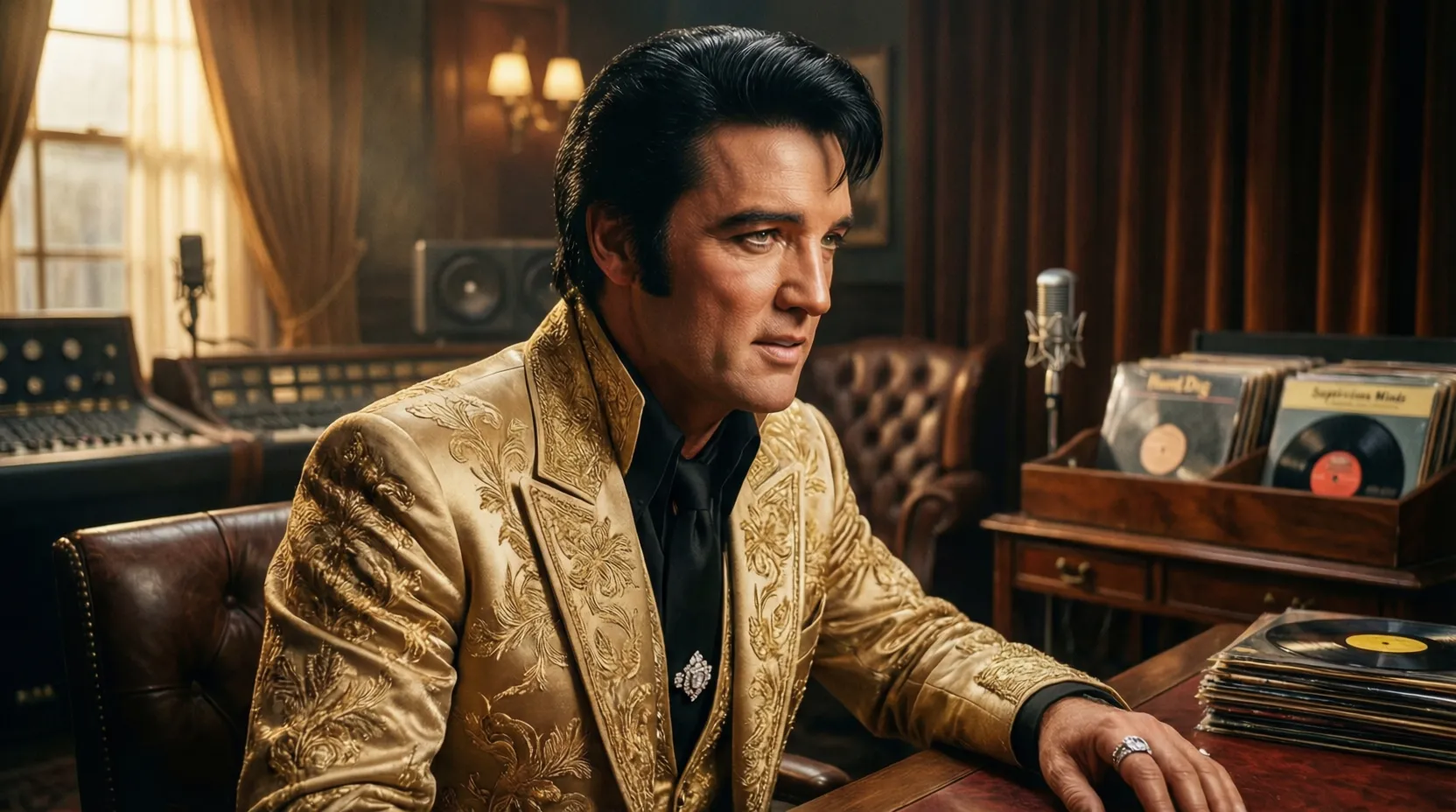
Elvis Presley, famously known as the King of Rock and Roll, remains one of the most iconic figures in music history.
From his humble beginnings in Tupelo, Mississippi, to becoming a global superstar, Elvis’s career spanned music, movies, and business ventures, making him not only a cultural legend but also a significant financial success.
With millions of albums sold worldwide, blockbuster movie roles, and a brand that continues to generate income decades after his death, his net worth has fascinated fans and financial analysts alike.
This article delves deep into Elvis Presley’s net worth, exploring the sources of his wealth, including music royalties, acting contracts, business ventures, and the enduring revenue from his estate at Graceland.
You’re a music fan, history enthusiast, or simply curious about celebrity wealth, understanding how Elvis amassed his fortune provides insight into the financial legacy of one of the world’s most beloved entertainers.
Early Life and Career Beginnings
Elvis Aaron Presley was born on January 8, 1935, in Tupelo, Mississippi, into a modest family. Growing up in a small, working-class household, Elvis was deeply influenced by gospel music from the church and rhythm and blues from the local community. His parents, Vernon and Gladys Presley, recognized his love for music early on and encouraged his talent. As a teenager, Elvis received his first guitar and began performing at school events, talent shows, and local radio programs.
In 1953, Elvis made his first recording at Sun Records in Memphis, paying for a personal demo recording that would eventually launch his career. It was this recording that caught the attention of Sam Phillips, the founder of Sun Records, who saw immense potential in the young singer. By 1954, Elvis began recording professional tracks, blending country, gospel, and blues into a unique style that would soon revolutionize the music industry.
During this early stage of his career, Elvis started to earn modest income from small performances and record sales. While these initial earnings were far from substantial, they marked the beginning of what would become a multi-million-dollar empire. This period not only honed his stage presence and vocal skills but also laid the groundwork for the enormous fortune he would build through his music, movies, and business ventures later in life.
Rise to Fame and Music Career
Elvis Presley’s rise to fame was rapid and transformative, earning him the title of the King of Rock and Roll. After signing with RCA Records in 1955, his career skyrocketed with hits like Heartbreak Hotel, Hound Dog, and Don’t Be Cruel. These songs not only topped charts but also earned Elvis significant royalties, marking the beginning of his financial success.
Touring extensively across the United States, Elvis drew massive crowds to live performances, generating substantial income from ticket sales. His unique style, combining energetic stage presence with a charismatic voice, set him apart from other artists and created a devoted fan base. Alongside concert earnings, record sales became a major contributor to his net worth. By the late 1950s, Elvis had sold millions of albums worldwide, solidifying both his popularity and his wealth.
During this period, he also appeared on national television shows, which further boosted his fame and income. Awards, recognition, and high-demand appearances added to his earnings, making him one of the highest-paid entertainers of the era. The combination of record sales, live performances, and media exposure established a financial foundation that would support his later ventures in movies and business, ensuring his net worth continued to grow steadily.
Acting Career and Movie Earnings
In addition to his music career, Elvis Presley made a significant mark in Hollywood, further boosting his net worth. He made his film debut in 1956 with Love Me Tender, which was a commercial success and showcased his potential as a leading man. Over the next two decades, Elvis starred in over 30 films, including popular titles like Jailhouse Rock, Blue Hawaii, and Viva Las Vegas.
Each movie not only earned him substantial salaries but also generated revenue through soundtracks, merchandise, and promotional appearances. Many of his films were accompanied by chart-topping songs, which added additional royalties to his income. During the 1960s, Elvis’s movies became a major source of wealth, sometimes surpassing his earnings from music alone.
While critics often debated the artistic quality of his films, there was no denying their financial impact. Elvis leveraged his cinematic fame to expand his brand, attracting lucrative endorsements and higher salaries for future projects. The combination of box office success, soundtrack royalties, and increased public recognition helped solidify his status as one of the highest-earning entertainers of his time. This diversification of income—from music to movies—was a key factor in the rapid growth of Elvis Presley’s fortune.
Business Ventures and Graceland
Elvis Presley’s financial success extended beyond music and movies, with strategic investments and his iconic home, Graceland, playing a key role. In 1957, Elvis purchased Graceland in Memphis, Tennessee, for $102,500—a decision that would become a central part of his legacy. The mansion not only served as his residence but also became a symbol of his wealth and status, reflecting the lifestyle of a superstar.
Beyond real estate, Elvis expanded his income through business ventures, including merchandise, endorsements, and licensing deals. Branded products, from clothing to collectible memorabilia, generated additional revenue streams during his lifetime and continued to do so after his death. His careful management of these ventures ensured a diversified portfolio of income sources, reducing reliance solely on performance earnings.
Graceland itself became an income-generating asset. Even before Elvis’s death, it attracted fans and tourists, with guided tours and special events creating steady revenue. Today, Graceland remains one of the most visited private homes in America, contributing significantly to the ongoing earnings of the Elvis Presley estate. This combination of property investment, merchandise, and branding demonstrates how Elvis leveraged his fame into long-term financial success, ensuring his fortune continued to grow beyond his active career.
Elvis Presley’s Net Worth at the Time of Death
When Elvis Presley passed away on August 16, 1977, at the age of 42, he left behind an impressive financial legacy. Estimates of his net worth at the time of death ranged between $5 million and $10 million, a substantial fortune for the era. His assets included Graceland, real estate holdings, vehicles, jewelry, personal collections, and, most importantly, royalties from his music and movies.
Although he had earned millions throughout his career, Elvis also faced significant expenses, including lavish spending on cars, clothes, gifts, and luxury items. These expenditures slightly reduced his net worth, but his financial portfolio remained strong due to ongoing income from his music catalog and film contracts.
Elvis’s estate was carefully managed after his death, with his will placing Graceland and other assets under the care of his family and Elvis Presley Enterprises. Comparatively, his fortune at the time of death positioned him among the wealthiest entertainers of the 1970s, ahead of many peers in music and film. Despite dying relatively young, Elvis had already secured a financial foundation that would allow his estate to grow significantly in the decades following his death.
Posthumous Earnings and Estate Growth
Even decades after his death, Elvis Presley continues to generate remarkable wealth, largely through the management of his estate. Graceland, his iconic Memphis mansion, has become one of the most visited private homes in the United States, attracting hundreds of thousands of tourists annually. Admission fees, guided tours, special events, and merchandise sales at Graceland alone generate millions of dollars in revenue each year.
Additionally, Elvis’s music catalog remains a consistent source of income. Re-releases of his albums, digital streaming royalties, and licensing deals for films, commercials, and documentaries contribute substantially to his estate’s annual earnings. Forbes consistently ranks Elvis among the highest-earning deceased celebrities, estimating that his estate brings in $40–50 million per year.
The success of posthumous ventures demonstrates the enduring popularity of Elvis Presley and the effective management of his financial legacy. Elvis Presley Enterprises, which oversees his brand, ensures that his name, image, and intellectual property continue to generate revenue. As a result, the total value of Elvis’s estate has grown far beyond what he amassed during his lifetime, solidifying his status as not only the King of Rock and Roll but also a long-lasting financial icon.
Elvis Presley’s Lifestyle and Spending
Elvis Presley’s immense wealth allowed him to enjoy a lavish lifestyle, reflecting both his status as a superstar and his personal tastes. Known for his love of luxury, Elvis spent generously on cars, jewelry, designer clothes, and extravagant home décor. He famously owned a collection of custom vehicles, including Cadillacs and other high-end cars, many of which became symbols of his success.
Graceland itself showcased his luxurious lifestyle, with opulent furnishings, a private racquetball court.
Legacy and Financial Impact
Elvis Presley’s influence extends far beyond music and movies, leaving a lasting financial and cultural legacy. As one of the first global entertainment icons, he set a precedent for how artists could monetize their talent, brand, and image. His pioneering approach to combining music, movies, and merchandise created a blueprint for future generations of entertainers to maximize earnings.
The financial impact of Elvis’s legacy is most evident in Graceland, which continues to generate millions of dollars annually through tourism, special events, and branded merchandise. His music catalog remains a significant source of posthumous income, with albums, digital streams, and licensing deals contributing to the estate’s ongoing wealth. Forbes regularly lists him among the highest-earning deceased celebrities, demonstrating that his popularity—and financial influence—has not diminished over time.
Beyond monetary value, Elvis’s legacy reshaped celebrity branding, showing how an artist’s image can be leveraged for decades. The careful management of his estate ensures that his name continues to generate revenue, influencing the way estates of other entertainers are handled. Ultimately, Elvis Presley’s financial impact is inseparable from his cultural significance, cementing his status as not only the King of Rock and Roll but also a lasting icon of wealth and entertainment strategy.
Conclusion
Elvis Presley’s financial journey is as remarkable as his musical legacy. From his modest beginnings in Tupelo, Mississippi, he rose to global superstardom, building a fortune through music, movies, and savvy business ventures. His early earnings from record sales and live performances laid the foundation for a wealth that would continue to grow throughout his lifetime. Acting in Hollywood films added another significant income stream, while Graceland and merchandising showcased his ability to turn fame into long-term financial success.
At the time of his death in 1977, Elvis left behind a substantial net worth, which, although impacted by his extravagant spending, was carefully managed by his estate. Over the decades, posthumous earnings from Graceland tourism, music royalties, and licensing deals have multiplied his fortune, keeping him among the highest-earning deceased celebrities in the world.
Elvis Presley’s financial legacy demonstrates the power of diversifying income and strategically leveraging personal branding. His story is not just one of artistic triumph but also of enduring wealth, showing how the King of Rock and Roll continues to influence both music and business. Even decades after his passing, Elvis remains a symbol of success, fame, and financial acumen, proving that true legends never lose their value.